
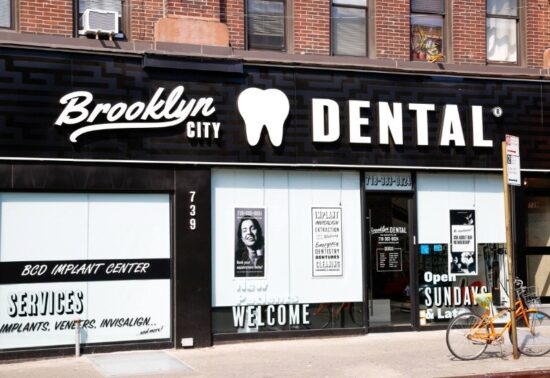
Between back-to-back work deadlines, seeing friends and family at McCarren Park, and everything it takes to keep life moving in North Brooklyn, we rarely have time for dental care. How concerned do I need to be if my gums occasionally bleed when I brush? How much discoloration or tooth sensitivity is just a part of life, and how much is a sign to see a professional? It can be hard to know the difference.
This guide simplifies the most common treatments patients should be aware of and, more importantly, when each one might actually make sense for you.
Minor Chips, Small Gaps, or Light Discoloration → Cosmetic Bonding or Veneers
When it’s not urgent: A chipped tooth that’s smooth to the tongue, doesn’t feel sensitivity to hot or cold drinks, and doesn’t bother you cosmetically. General yellowing from coffee or wine is surface staining and usually responds to a professional cleaning or whitening. These are not urgent issues.
When you should see a dentist: A chipped tooth deserves attention when you can feel a sharp or rough edge with your tongue (that can cut the soft tissue in your mouth), or when the chipped tooth is painful, sensitive to hot or cold drinks, or feels pressure when you bite down. If a chip exposes a yellowish or brownish layer underneath the white enamel, that’s dentin, a deeper layer of the tooth that’s more vulnerable to decay. That warrants a visit.
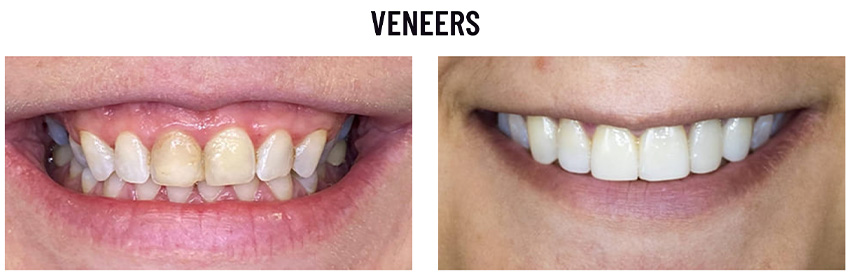
For discoloration, the sign to look for is when a single tooth turns noticeably darker while the teeth around it haven’t changed. That can indicate a dying nerve inside the tooth, prior trauma, or decay, and it won’t respond to whitening. If the underlying issue turns out to be a nerve problem, decay, or trauma, your dentist will recommend a treatment plan that addresses the cause first, which may involve a root canal, crown, or other restorative work before anything cosmetic is considered. The options below are for surface-level concerns: small chips, minor gaps, and staining that’s aesthetic rather than a sign of something deeper.
What practical options do we have?
Dental cosmetic bonding involves applying a tooth-colored composite resin directly to the tooth. A dentist shapes it by hand, hardens it with a special light, and polishes it to match your natural teeth. The entire process takes 30 to 60 minutes per tooth and can often be completed in a single visit. Bonding is minimally invasive. In most cases, no enamel needs to be removed and it’s one of the most affordable cosmetic options available. It works well for small chips, minor gaps, and light discoloration. With good care, bonding typically lasts 3 to 10 years before needing a touch-up.
Porcelain veneers are thin shells custom-fit to your mouth and bonded to the front surfaces of your teeth. They’re more durable and stain-resistant than cosmetic bonding resins, and they tend to last 10 to 20 years. However, veneers require removing a thin layer of enamel to ensure a proper fit, so the process is not reversible. They also require at least two visits and are a larger investment.
Is it right for me? If you have a small chip or a bit of discoloration on a front tooth and want a quick, budget-friendly fix, bonding is often the right starting point. If you’re looking for a longer-lasting improvement across several teeth, or if the cosmetic issue is more pronounced, veneers may be worth the investment. If you’d prefer a professional perspective to help decide, an exam can help you understand what each option would look like for your specific situation.
Damaged Teeth That Need Structural Support → Crowns

When it’s not urgent: Hairline cracks in the outer enamel, which are called craze lines, are common in adult teeth. They’re shallow, painless, and generally a cosmetic issue, not a structural one. Your dentist may note them at a cleaning, but they usually don’t require treatment.
When you should see a dentist: The warning sign to look for is pain when you bite down, and a sharp sensation when you release the bite. This is characteristic of a more serious cracked tooth. Sensitivity to hot and cold that lingers rather than fading quickly is another sign. If you can see a visible crack line, a brown or dark line running vertically through the tooth, or if a piece of an old filling has broken off or feels loose, the situation is more urgent. A tooth that feels “off” when you chew, even if the pain comes and goes, is often a crack that hasn’t fully separated yet. The earlier a crack is caught, the more likely the tooth can be saved with a crown rather than something more involved like a root canal or extraction.
What practical options do we have?
Dental crowns are caps that cover the entire visible portion of the tooth, restoring its shape, strength, and appearance. You might need one if you have a tooth that’s fractured, a large cavity that a standard filling can’t support, or a filling that’s breaking down and leaving the tooth vulnerable. Modern crowns are made from material that’s color-matched to blend with your surrounding teeth. The process usually requires two visits, one to prepare the tooth and take impressions, and a second to place the crown.
Is it right for me? Crowns address a tooth that’s at risk of further damage. If your dentist recommends a crown, it’s because the tooth’s structure has been compromised enough that it needs full coverage to function properly and avoid more serious problems down the road.
Bleeding Gums or Persistent Bad Breath → Gum Treatment, Scaling and Root Planing

When it’s not urgent: If your gums bleed once after an aggressive brushing session or after flossing for the first time in a while, that’s a reaction to the immediate irritation and not necessarily a sign of disease. Healthy gums are firm, pink, and don’t bleed from routine care.
When you should see a dentist: If your gums bleed consistently, even with gentle brushing or normal flossing, that’s likely inflammation. Gums that are red, puffy, or feel soft and spongy instead of firm are showing signs of gingivitis. Persistent bad breath or a bad taste in your mouth that keeps coming back after brushing is another red flag. Bacteria below the gum line produce odor that surface-level cleaning can’t reach. If your gums are starting to pull away from your teeth, your teeth look longer than they used to, or you notice new gaps forming between teeth that were once tight together, that may mean things have already progressed beyond gingivitis into periodontitis. Nearly half of adults over 30 in the U.S. have some form of periodontitis. It is more common than most people realize. At that stage, you’re dealing with potential bone loss and the sooner it’s addressed, the more options you have.
What practical options do we have?
Scaling and root planing is a non-surgical deep cleaning that goes beyond a routine check-up. Your dentist uses specialized instruments to remove plaque and tartar buildup from below the gum line (scaling), then smooths the tooth roots (planing) so the gum tissue can reattach more effectively. A local anesthetic is used to avoid any pain, and most patients experience mild sensitivity after receiving care, which subsides after 3 to 7 days.
Is it right for me? If your gums bleed regularly or you’ve been dealing with bad breath that won’t go away, it may be worth having your gums evaluated. The important thing to know is that gingivitis is fully reversible. Once it crosses into periodontitis, the bone loss that comes with it is not. Scaling and root planing is one of the most effective ways to stop gum disease from advancing and can often eliminate the need for more invasive procedures later.
Missing Teeth → Bridges, Dentures, and Implants
When it’s not urgent: If you’ve just had an extraction and your dentist is already discussing next steps with you, you have a window to weigh your options. A single missing tooth that’s not visible and isn’t causing discomfort may feel like something you can put off, and in the short term, that’s understandable.
When you should see a dentist: The clock starts sooner than most people expect. Within the first three to six months after losing a tooth, the jawbone in that area starts to shrink. Studies suggest that up to 25% of the bone ridge’s volume can disappear within the first year. The process is fastest in the early months and slows over time, but it doesn’t stop on its own.
Meanwhile, the surrounding teeth can shift into the gap, affecting your bite and making other teeth harder to clean. The longer a gap goes untreated, the more bone is lost and significant bone loss can make certain replacement options, like implants, more complicated or require additional procedures like bone grafting. If you’ve recently lost a tooth or had one extracted, the best thing you can do is talk to a dentist about replacement options sooner rather than later, even if you’re not ready to commit to a plan yet.
What practical options do we have? There are three common options for replacing missing teeth, and the right one depends on your specific situation.
A dental bridge fills the gap left by one or more missing teeth by anchoring an artificial tooth (or teeth) to crowns placed on the healthy teeth on either side. Bridges don’t require surgery. The process takes two visits, one to prep the bridge and second to place it. Bridges restore both the appearance and function of your smile. The tradeoff is that the neighboring teeth need to be filed down to support the crowns, and bridges typically last 5 to 15 years before needing replacement. They also don’t prevent bone loss beneath the missing tooth.
Dentures are removable prosthetics that are either partial (for some missing teeth), or full (for an entire top or bottom half). They’re generally the most affordable option and can be a good choice when multiple teeth are missing or when the surrounding teeth aren’t strong enough to support a bridge. Modern dentures look natural, but they require daily removal and cleaning, and some patients find them less stable or comfortable than fixed options.
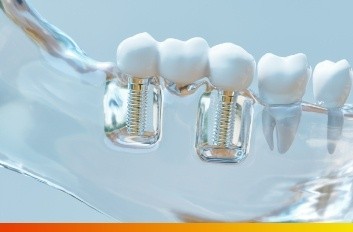
Dental implants are titanium posts surgically placed into the jawbone, where they fuse with the bone over several months to create a permanent foundation for a crown. Implants are the closest option to a natural tooth in terms of look, feel, and function. They don’t require altering adjacent teeth, and because they integrate with the jawbone, they help prevent bone loss.
Implants are the most durable long-term solution and can last a lifetime with proper care. The tradeoffs are a longer treatment timeline (several months from placement to final crown), a higher upfront cost, and the need for adequate bone density and overall health to support the procedure.
Is it right for me? If you’re missing a tooth, the most important thing is not to leave the gap untreated. Which replacement option is right for you depends on factors like how many teeth are missing, the health of your jawbone and surrounding teeth, your budget, and your personal preferences. There’s no single answer that’s right for everyone, and a conversation with your dentist can help clarify which path makes the most sense for your situation.
Have Questions?
Across the board, earlier treatment gives you more options and leads to healthier outcomes.
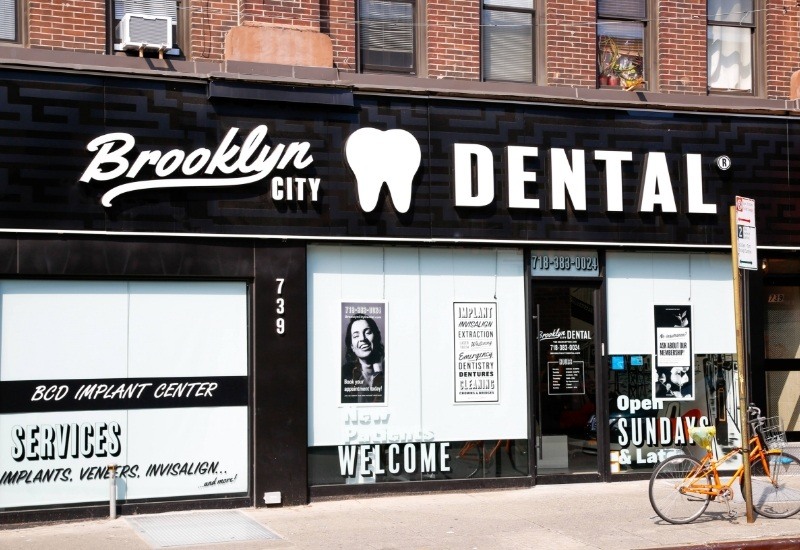
Brooklyn City Dental is located one block from the Nassau G stop in Greenpoint. Walk-ins are welcome, or call to schedule a consultation at (718) 233-1031. We’re happy to talk through any of these treatments and help you figure out what, if anything, makes sense for you.